

By Kudakwashe Musengi
For conservation professionals, some of the most valuable lessons cannot be learnt in a classroom alone. They are found in the landscapes where conservation decisions are made, through conversations with experienced practitioners and by observing first-hand the complex challenges facing protected areas.
As part of the Advanced Certificate in Transfrontier Conservation Management – National Qualifications Framework (NQF) Level 6, students connect their academic learning with real-world conservation practice through Work-Integrated Learning. Recent worksite visits provided opportunities to engage with students, workplace mentors and conservation practitioners while gaining insight into research projects being undertaken across protected areas and conservation landscapes.
The visits allowed for meaningful discussions around students’ research progress, the challenges they are encountering and the relationship between their academic studies and their day-to-day conservation responsibilities.
Research rooted in real conservation challenges
At Etosha National Park in Namibia, student Roux Munwela is investigating rhino poaching, with a particular focus on anti-poaching operations involving multiple stakeholders. The research examines the effectiveness of Namibian Defence Force patrol strategies and operational approaches in reducing rhino poaching incidents. It also explores the role of the National Integrated Database of Wildlife Crime in supporting intelligence gathering, strategic decision-making and coordinated enforcement.
The study also considers the broader implications of increasingly militarised approaches to conservation, including their interaction with traditional conservation practices and their socio-political impacts on local communities.
At Wilderness in the Garden Route National Park, Verouxze Morris is investigating the drivers of increasing wildfire frequency. Fire is a natural and important ecological process in many South African ecosystems, particularly fynbos, but changes in fire frequency and intensity can have significant consequences. The research considers how ecological factors, fire management practices, climate, human activity and landscape characteristics interact to influence fire regimes.
At Bontebok National Park, Jason Filander is examining the role of fire in fynbos and renosterveld ecosystems. His research focuses on how fire frequency and intensity affect vegetation, species diversity and overall ecosystem health.
The work highlights an important conservation principle: in fire-adapted ecosystems, effective fire management is not simply about preventing fires. It is about understanding when, where and how fire should occur to maintain ecological processes while protecting biodiversity and infrastructure.
Meanwhile, at Nkhotakota Wildlife Reserve in Malawi, Paul Mzinza is assessing the drivers and impacts of illegal gold mining. Illegal mining can affect habitats, water resources, wildlife, local livelihoods and protected-area management. His research seeks to understand both the factors driving people towards illegal mining and the resulting environmental and socio-economic impacts.
The value of mentorship
Workplace mentors are a central part of the Work-Integrated Learning experience, helping students translate academic concepts into practical conservation applications. During the visits, students, mentors and the academic team discussed research methodologies, data collection, access to information, stakeholder engagement and the practical realities of conducting research in protected areas.
These interactions also reinforced the collaborative nature of conservation. Students are working in environments that require engagement with park managers, law-enforcement personnel, communities, researchers, government agencies and other stakeholders.
Mentors, therefore, provide more than technical guidance. They help students understand the realities of conservation decision-making while developing professional skills such as communication, problem-solving, critical thinking and stakeholder engagement.
Learning beyond the classroom
The worksite visits reinforced the value of experiential learning in preparing the next generation of conservation professionals. Whether addressing rhino poaching in Namibia, changing wildfire patterns in the Garden Route, fire ecology at Bontebok National Park or illegal gold mining in Malawi, each challenge requires an understanding of ecological processes alongside social, economic, institutional and governance realities.
This is where Work-Integrated Learning adds value. It creates a bridge between academic learning and practical experience, allowing students to test ideas, challenge assumptions and develop approaches grounded in real conservation contexts.
As their research progresses, these students are contributing to a broader understanding of the challenges facing protected areas and conservation practitioners across Southern Africa. From the classroom to the conservation landscape, the learning continues.
The SAWC Students Celebrate Mandela Day through Community Service
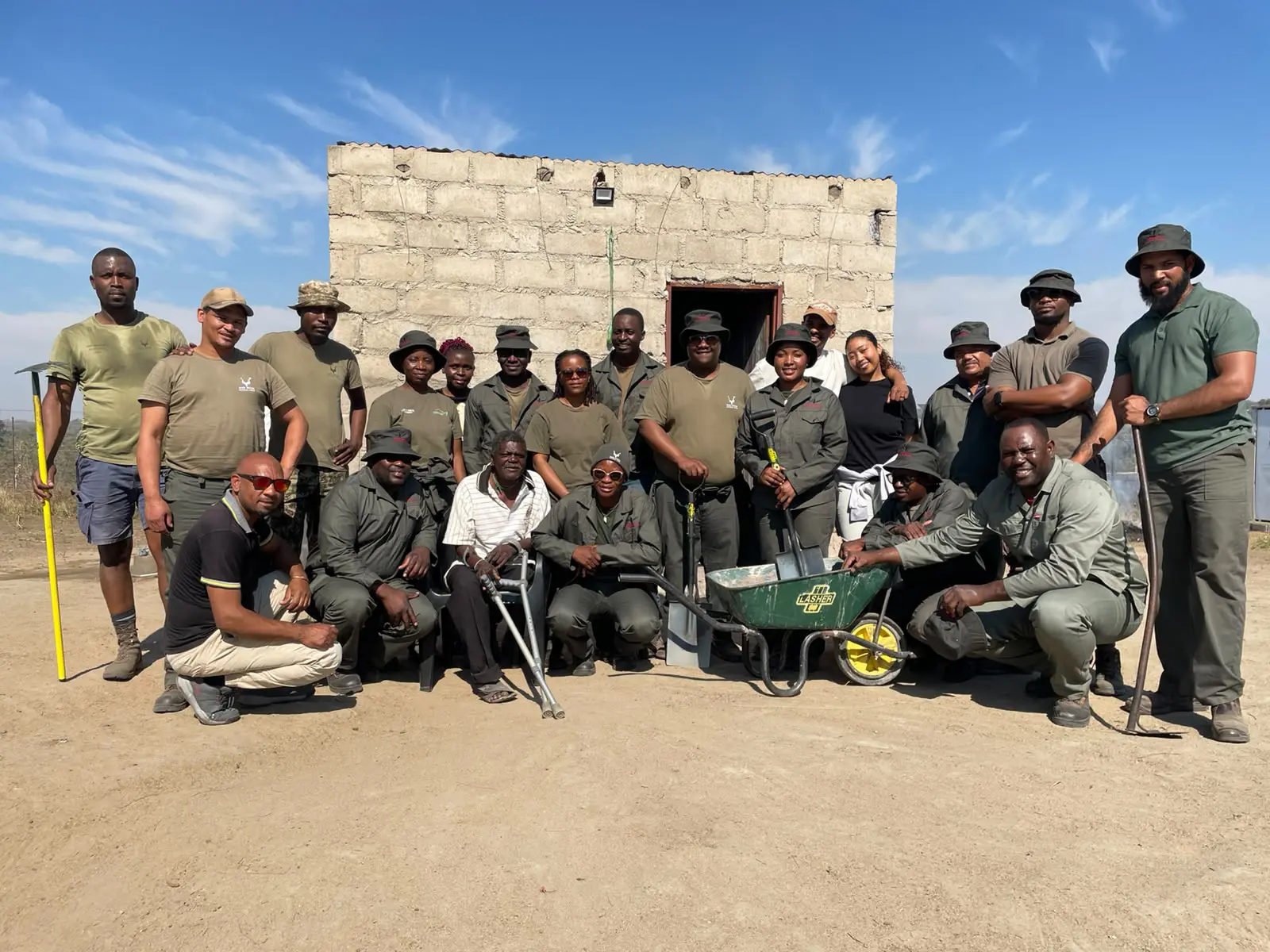
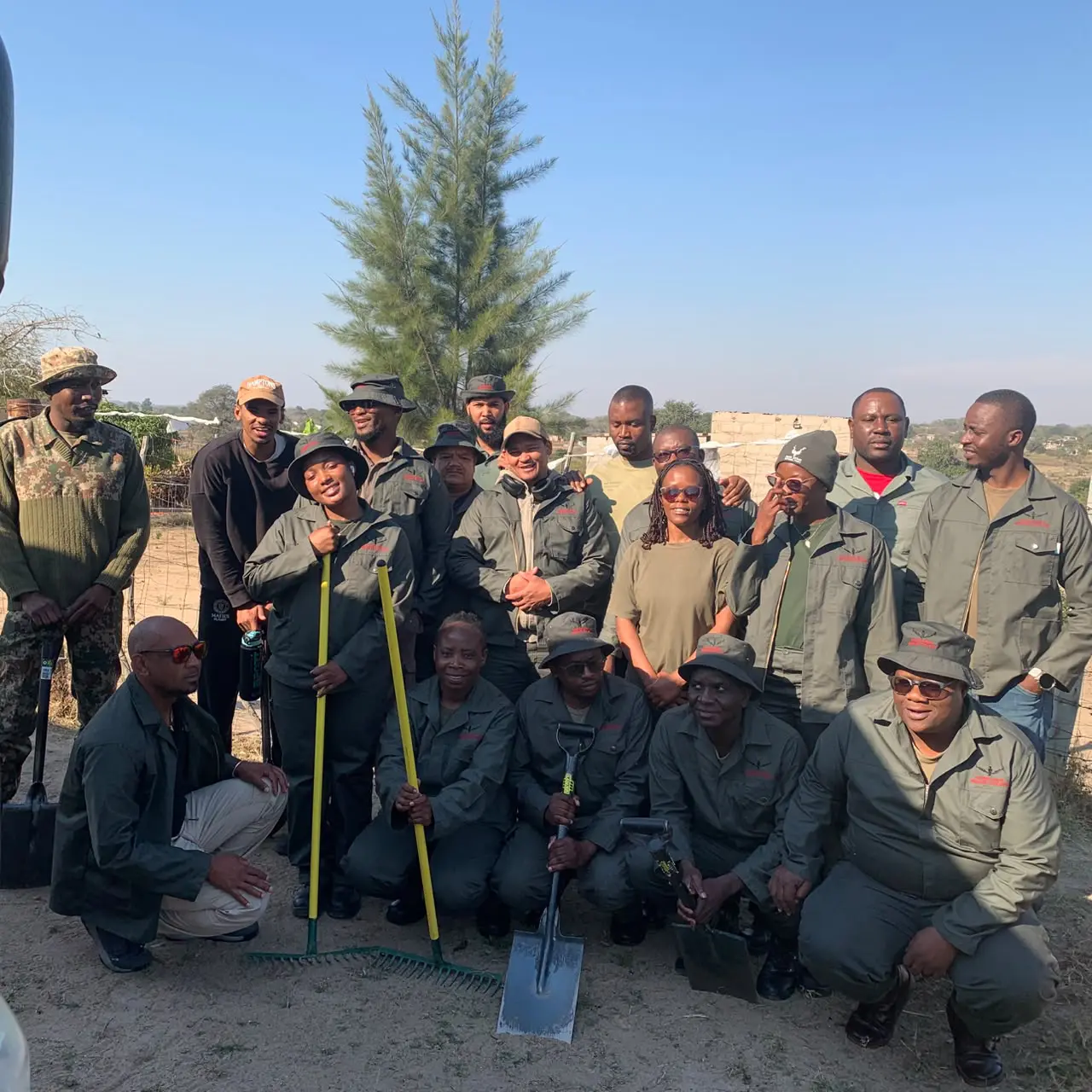
In celebration of Nelson Mandela International Day on 18 July, a group of SAWC students dedicated their 67 minutes of service to supporting an elderly resident of Welverdiend Village.
Living alone and using crutches following the amputation of his left leg, Mr Andries Manganyi welcomed the students into his home, where they provided practical assistance and companionship.
Originally from Mozambique, Mr Manganyi came to South Africa to reunite with family members who had settled in Phalaborwa and Welverdiend. Following a medical condition that resulted in the amputation of his leg, he now lives alone in a one-room house. Some of the furniture in his home has been donated by members of the local community. Unemployed and reliant on financial assistance from his sister and neighbours, he also faces challenges in accessing healthcare services.
Accompanied by Student Support Officer, Ms Rejoyce Mdhlovu, who introduced the students to Mr Manganyi and explained the purpose of their visit, the group divided into teams to tackle a range of tasks. Some cleaned the house and washed dishes, while others swept the yard, fetched water, cleared weeds from the garden and levelled uneven areas around the home.
The students also brought Mr Manganyi fresh fruit and, just as importantly, spent time with him – sharing stories, taking photographs and enjoying his company.
The visit reflected the longstanding relationship between the SAWC and the Welverdiend community. The College continues to contribute to the community through employment opportunities, internships, and through its school’s programmes. It also identifies young people with potential and creates opportunities for them to pursue training at the College. The community has also supported the College over many years by providing venues for practical training.
For the students, the experience, and the day spent in the community, was both meaningful and enjoyable. Their enthusiasm made saying goodbye particularly difficult. Reflecting on the day, student John Otto said:
“We should do something like this every month. If Mandela Day is about putting a smile on someone’s face, then it should not be done only once a year.”
Mr Manganyi was equally grateful for the visit, capturing the importance of connection and community in a few simple words:
“A home without visitors is not a complete home.”