

Learning together to restore landscapes
Restoring degraded landscapes is not simply an ecological challenge. It also involves the people who live and work in those landscapes, the livelihoods that depend on them, and the institutions and relationships that influence how natural resources are managed. This is the focus of Commonland, a not-for-profit organisation working with partners in around 20 countries to restore degraded landscapes and support long-term benefits for people, nature, communities and businesses.
At the centre of Commonland’s work is the 4 Returns Framework, a practical approach to landscape restoration that considers four connected outcomes: inspiration, social, natural and financial returns. The framework encourages different stakeholders to work towards a shared vision for restoring landscapes while recognising that healthy ecosystems, thriving communities and sustainable economies are closely linked.
A partnership grounded in practice
The Southern African Wildlife College (SAWC) and Commonland began working together in 2024, following the pilot of the SAWC’s Restoring Our Landscapes Short Learning Programme with the Makuleke community.
The partnership has since grown into a broader collaboration, creating opportunities for the College to work with Commonland and its partner landscapes to explore how community-led conservation and landscape restoration can be applied in different contexts.
A key strength of the partnership has been the opportunity to adapt learning to what is happening on the ground. Rather than treating training as a fixed product, the SAWC works with partners to understand their specific needs and context, and then uses the experience gained through implementation to strengthen its programmes.
This reflects the Community-led Conservation Practice (CLCP) team’s approach that products inform field application, while field application strengthens products.
Learning across landscapes
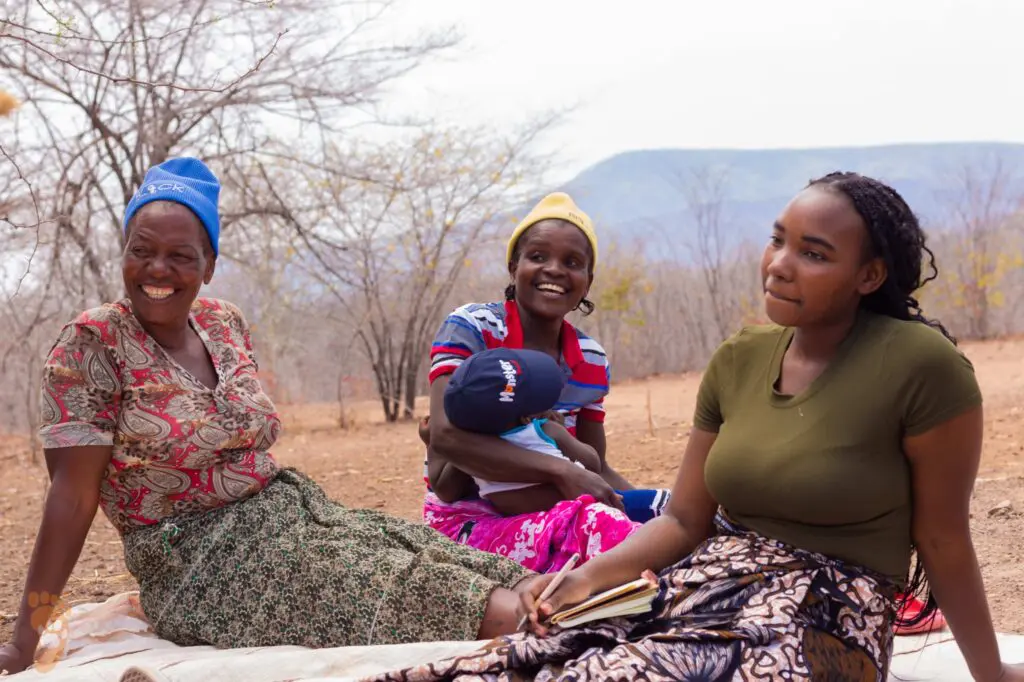
The partnership has also opened opportunities to work with Commonland’s wider network of landscape partners. In Zimbabwe, for example, the College has worked with Wildlife Conservation Action (WCA) to develop and apply community-focused learning linked to human–wildlife interaction, landscape restoration and community governance.
These programmes are shaped around the realities of each partner and landscape, while the lessons they generate can inform work in other settings. This growing experience forms part of the College’s wider Community-led Conservation Practice portfolio, which now spans South Africa, Mozambique, Zimbabwe, Zambia and Botswana.
Beyond one-off training
The experience has reinforced a broader lesson for the SAWC: community-led conservation requires more than training. Effective participation depends on trust, rights, appropriate relationships and enabling institutions, as well as the ability to apply learning in practice. Programmes also need to respond to differences in language, roles, knowledge, risks and landscape realities. For the College, partnerships such as the one with Commonland provide the opportunity to develop this kind of deeper, context-specific capacity development.
Commonland brings its landscape-restoration experience and the 4 Returns approach, while the SAWC contributes its expertise in conservation education, training and applied capacity development. Together, this creates space for knowledge to move in both directions.
When we teach, we learn
The value of the partnership is ultimately reflected in this two-way exchange. Working alongside partners in different landscapes allows the College to test approaches, learn from practitioners and communities, and carry those lessons into future training and programmes.
At the same time, partners gain access to learning approaches and tools that can be adapted to their own conservation contexts. It is a simple idea, but an important one: when we teach, we learn; when we learn, we teach.
Through this continued exchange, the partnership is helping to strengthen the knowledge, relationships and practical capacity needed to support community-led conservation and more resilient landscapes.