

INSTITUTIONAL NEWS
Another Successful #Running Wild!
Another #Running Wild has crossed the finish line and, once again, the Southern African Wildlife College (SAWC) community showed just how much can be achieved when people come together for conservation.
The College’s annual fundraiser in support of the Protected Area Integrity: Beyond Law Enforcement thematic area brought runners, supporters, partners and conservation champions together for a memorable day at the SAWC.
From seasoned runners taking on the 21 km route to those tackling the 10 km challenge, the day was filled with determination, camaraderie and plenty of encouragement along the way. More importantly, this closed event once again raised valuable funds for conservation. Year after year, the event helps generate support for the SAWC’s Aerial and K9 units, strengthening the specialist capabilities that contribute to protecting wildlife and conservation areas.
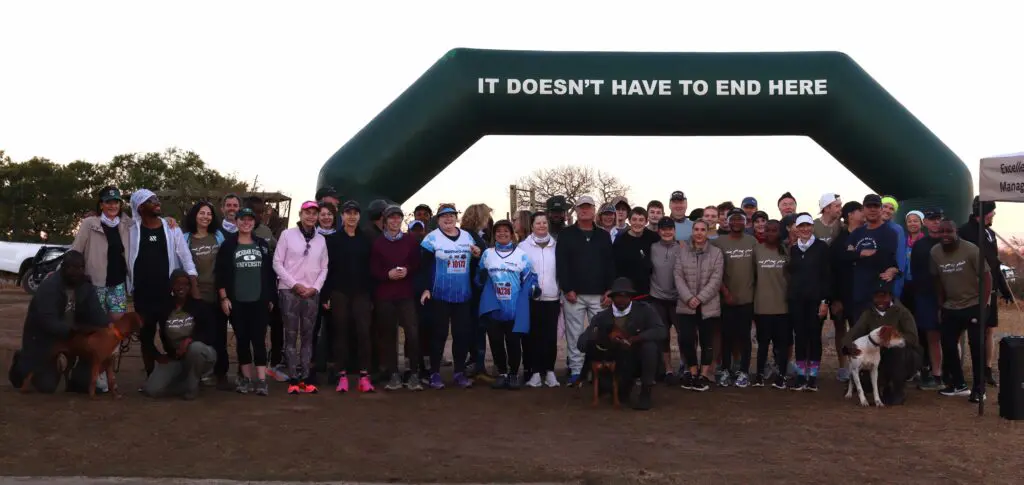
This year saw our most ambitious fundraising target yet, and the response from our supporters demonstrated what a committed conservation community can achieve together. To everyone who ran, donated, volunteered, partnered with us, cheered from the sidelines or helped behind the scenes: thank you. #Running Wild would not be possible without you, and every contribution helps us continue the work that the event was created to support. To those that also contributed to the rebuilding of our bush boma, we would not have been able to move forward with this, without your support.
Next challenge: Team SAWC takes on the Wildlife Ranger Challenge
The running shoes are not being packed away just yet. On 19 September, Team SAWC will once again take on Tusk’s annual Wildlife Ranger Challenge, joining ranger teams across Africa in raising awareness and vital support for the people working on conservation’s frontline.
This year, Tebogo, Reagan, Clive and Ernest will represent the College, putting their fitness, teamwork and determination to the test in support of Africa’s rangers.
Behind the challenge is a serious purpose. Rangers work in demanding environments to protect wildlife and wild spaces, often with limited resources. Supporting their welfare, skills, training and operational capacity is essential to helping them do this work effectively and safely.
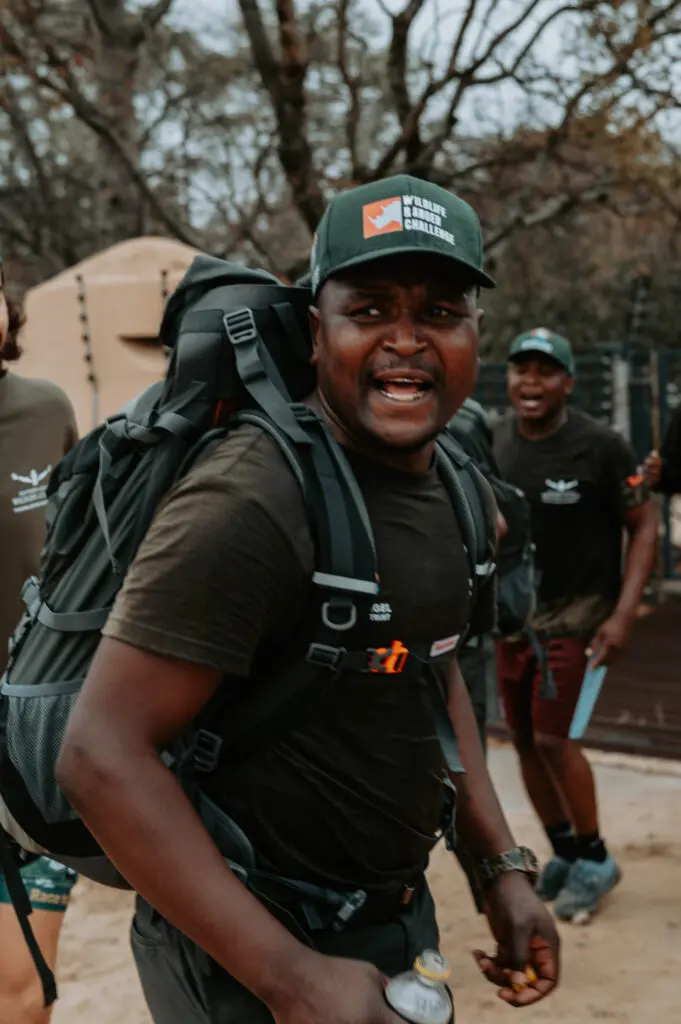
Funds raised by Team SAWC will support rangers in need as well as the College’s Protected Area Integrity: Beyond Law Enforcement thematic area, including ranger training and the SAWC’s Aerial Support and K9 units.
LEARNING & TEACHING
Bringing Conservation Theory to Life: Field Research & Community Action
From evaluating rhino anti-poaching strategies in Etosha to investigating fire management in the Garden Route and addressing illegal mining in Malawi, our NQF Level 6 students are connecting academic theory directly with real-world conservation challenges. Discover how Work-Integrated Learning and mentorship are shaping the next generation of practitioners—and see how our students put community stewardship into action during their Mandela Day outreach in Welverdiend Village.
Student Pathways & Institutional Support: Building Conservation Leaders
As the demand for accredited conservation education grows, SAWC continues to expand pathways for emerging leaders across Southern Africa. With student registrations reaching 985 at our Student Hub, see how our NRM Level 5 cohort, Youth Access Bridging Programme, and strengthened academic administration systems are opening doors for future environmental stewards.
Behind the Standards: The Everyday Work of Quality & Accreditation
High-impact conservation education relies on rock-solid institutional systems behind the scenes. Step inside the Quality Management and Accreditation Department to discover how daily administrative compliance, document governance, and continuous improvement ensure SAWC maintains the highest standards as a leading training institution.
CONSERVATION SCIENCE
In Conservation Science, collaboration and applied research remain central to strengthening conservation practice in Africa. This issue highlights the growing partnership between the SAWC and ERAIFT in the Democratic Republic of Congo, which is creating opportunities to share expertise and strengthen conservation education across regions. We also meet Trésor Daniel Mefire, an ERAIFT MSc candidate whose research internship at the College is exploring wildlife road mortality in the Greater Kruger landscape.
PROTECTED AREA INTEGRITY: BEYOND LAW ENFORCEMENT
Protecting protected areas requires more than law enforcement alone. It depends on well-trained and prepared rangers, strong regional partnerships and specialist capabilities that can respond to changing conservation challenges. In this issue, we look at how ranger development is strengthening conservation capacity across the region, from the graduation of a new generation of Kruger National Park field rangers and the training of KAZA participants to refresher programmes in Mozambique. We also go behind the scenes with the SAWC K9 Unit, where specialised dogs and their handlers are helping demonstrate the practical realities of wildlife protection.
COMMUNITY-LED CONSERVATION PRACTICES
Communities living alongside wildlife experience conservation in very practical ways – through interactions with wildlife, access to natural resources, local decision-making and the health of the landscapes around them. In this issue, we look at how the SAWC’s Community-led Conservation Practice team is working with communities and partners to strengthen the knowledge, skills and governance needed to navigate these realities, from human–wildlife interaction training in Zimbabwe to environmental education and the launch of community-developed Governance Guidelines in the Greater Kruger landscape.
NATURE BASED ECONOMY
Across Southern Africa, nature-based economies have the potential to connect conservation with livelihoods, skills and sustainable enterprise. In this issue, we look at how the SAWC is working with partners to turn that potential into practice – from supporting implementation of the SADC Wildlife-based Economy Strategy and strengthening community engagement capacity to developing a leather tannery demonstration hub and expanding professional herding training across regional landscapes.
LEADING AND MANAGING IN CONSERVATION
Effective conservation requires strong leadership alongside technical expertise. As conservation challenges become increasingly complex, professionals need to lead people, organisations and partnerships as well as themselves. The College is responding with a new Conservation Leadership Learning Programme, planned for 2027, designed to strengthen these leadership capabilities and support a new generation of African conservation leaders.
PARTNER SPOTLIGHT: Commonland
In this issue’s Partner Spotlight, we look at Commonland, a not-for-profit organisation working with partners around the world to restore degraded landscapes through its practical 4 Returns Framework. Since beginning their partnership, the SAWC and Commonland have used landscape-based work to develop and test approaches to community-led conservation, with lessons from the field helping to strengthen training and practice. It is a partnership built on a simple principle: when we teach, we learn – and when we learn, we teach.