By Scott Yammin, Precious Malapane and Bruce McDonald
Building Conservation Leaders Across Borders Through KAZA 2026
The Southern African Wildlife College (SAWC) recently hosted the 2026 Kavango-Zambezi Transfrontier Conservation Area (KAZA) training programme, proudly supported by the University of Kent in collaboration with the Notsew Orm Sands Foundation for the project: “Burnett Ranger Training”.
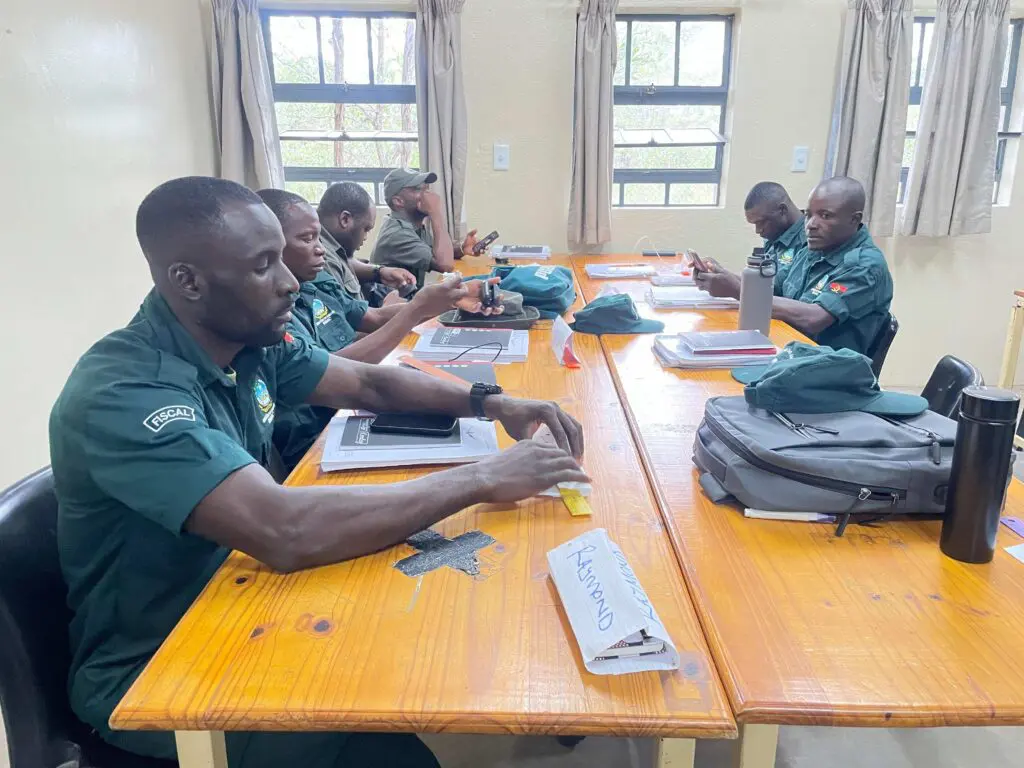
The programme brought together wildlife field rangers from Angola, Botswana, Namibia, Zambia, and Zimbabwe. Over an intensive 11-week period, participants completed a structured learning journey designed to build technical competence, leadership capability, and professional confidence.
The programme commenced with Basic Field Ranger (BFR) Training, where participants refreshed and strengthened core ranger competencies, including tracking, navigation, patrol procedures, fieldcraft, observation skills, and operational safety. This foundational phase ensured a common standard of excellence among participants from different countries and conservation contexts.
A recess-week provided participants with an opportunity to visit surrounding protected areas and conservation sites. Beyond offering a brief respite from formal training, these visits encouraged reflection, peer learning, and the exchange of experiences between rangers working in diverse landscapes across the region.
Training then progressed into Crime Scene Management, a critical component of modern conservation operations. Participants learned how to secure wildlife crime scenes, identify and preserve evidence, document incidents, and collect biological samples for forensic investigations. Particular emphasis was placed on DNA sampling from wildlife carcasses, enabling rangers to support investigations and strengthen the prosecution of wildlife crimes through scientifically sound evidence collection.
The programme also included Dangerous Game Awareness (DGA) training, equipping participants with the knowledge and practical skills needed to operate safely in environments inhabited by elephants, buffalo, rhinoceros, and large predators. The module focused on animal behaviour, risk assessment, situational awareness, and appropriate responses to potentially dangerous encounters.
Recognising that conservation success relies on people as much as wildlife, the programme incorporated dedicated sessions on human rights, ethics, and community engagement. Through practical discussions and scenario-based exercises, participants explored how trust-building, respect, and constructive relationships with local communities contribute to long-term conservation success.
The final phase of training focused on Protected Area Security Operations (PASOP), where participants integrated the knowledge and skills acquired throughout the programme. Training covered operational planning, intelligence-led conservation approaches, anti-poaching strategies, leadership under pressure, and coordinated field operations.
By combining fieldcraft, forensic awareness, operational planning, leadership development, and community-centred approaches, the KAZA programme prepares conservation practitioners for the complex realities of modern protected area management. Graduates return to their respective countries better equipped to protect biodiversity, support law enforcement efforts, and foster stronger relationships between conservation authorities and local communities.
Creating Conservation Career Pathways for Communities Adjacent to Kruger National Park
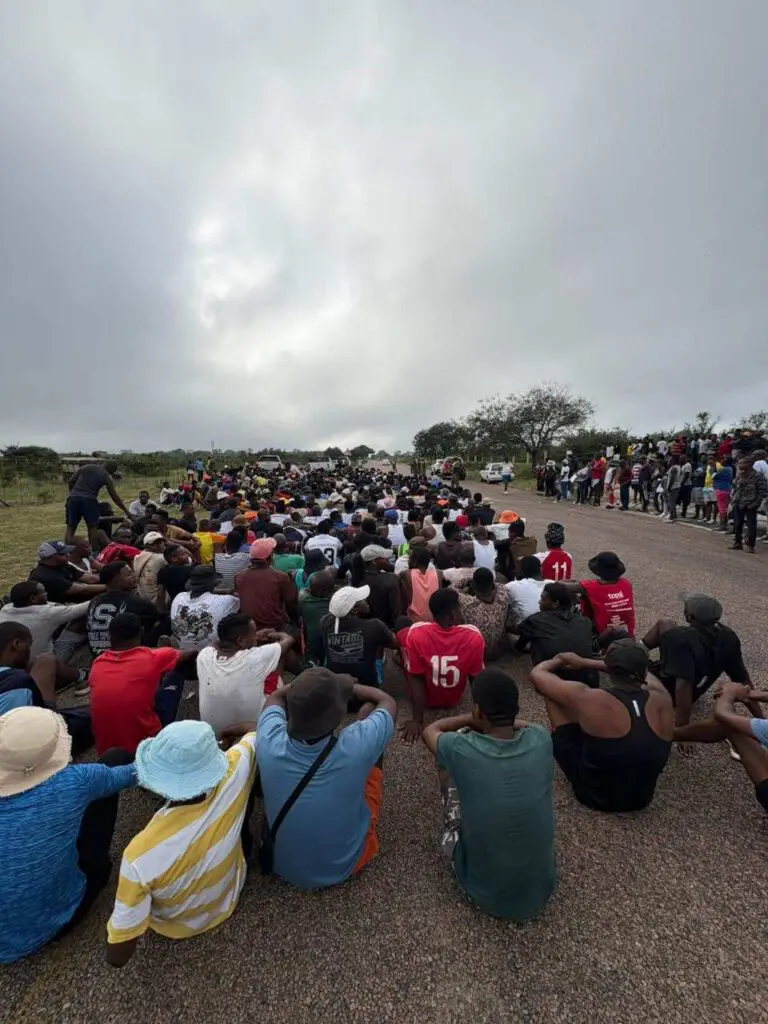
Protected Area Integrity is strengthened when neighbouring communities have opportunities to actively participate in conservation. During the quarter, a field ranger recruitment and selection process was conducted for candidates from the seven tribal authorities bordering the Kruger National Park. The initiative sought to identify suitable men and women from neighbouring communities for future employment as field rangers.
Initial pre-selection assessments were conducted at various park gates, after which shortlisted candidates were invited to participate in a national selection process hosted at the SAWC. Candidates completed a series of assessments designed to evaluate their physical fitness, mental resilience, and overall suitability for ranger work. These included timed endurance runs, push-up and sit-up evaluations, and mental aptitude assessments aimed at measuring focus, problem-solving ability, and readiness for the demands of protected area operations.
Successful candidates then proceeded to field ranger training at the College’s ranger training facility, where they developed the technical, operational, and professional skills required to work effectively in protected areas. Upon successful completion of the programme, graduates will be employed as field rangers within the Kruger National Park.
This initiative not only strengthens conservation capacity but also creates meaningful employment opportunities for young people living alongside one of Africa’s most important protected areas, further reinforcing the vital connection between communities and conservation.
Strengthening Regional K9 Capacity in Mozambique
The College’s K9 Unit continues to play an important role in strengthening conservation law enforcement capacity across the region. In May, Simon Mnisi, the SAWC’s K9 Dog Master, travelled to Zinave National Park, Mozambique, to conduct refresher training and operational assessments for local K9 teams.
The visit focused on evaluating two conservation dogs, Chicago and Rudi, as well as assessing three handlers. Training covered kennel management and maintenance, canine health and daily care, GPS navigation, helicopter deployment procedures, and tracking techniques.
The exchange provided an opportunity to strengthen operational standards while sharing practical experience across conservation landscapes. The visit also highlighted the growing network of conservation professionals working collaboratively across southern Africa to improve protected area security and wildlife protection using canine capacity.
International Knowledge Exchange with Yuverta University Students
The K9 Unit also hosted a two-day learning exchange with students from Yuverta University in the Netherlands, providing an opportunity for practical demonstrations, knowledge sharing, and cross-cultural learning.
The visit began with an introduction to the College’s K9 programme, including the role of conservation dogs in anti-poaching operations, wildlife crime detection, and protected area security. Students then toured the kennels and observed live field demonstrations showcasing the capabilities of working conservation dogs.
Detection exercises included searches for ammunition and other target items in open environments, demonstrating the precision and effectiveness of trained detection dogs. Students were also given the opportunity to participate in line-handling exercises, gaining hands-on experience working with tracking dogs under the supervision of the College’s handlers.
The second day focused on more advanced operational activities. Students observed both fresh and aged tracking exercises, vehicle searches, pipe searches, and open-area detection scenarios. They also witnessed coordinated deployments where multiple dogs worked together from release to target contact.
A particularly valuable aspect of the exchange involved introducing handlers to clicker-based training techniques. Through interactive exercises, students demonstrated how positive reinforcement methods can enhance learning and communication between handlers and dogs.
The visit concluded with a special moment when the visiting students were invited to name one of the College’s puppies. They chose the name Inspire, explaining that it reflected both the remarkable abilities of conservation dogs and the College’s role in inspiring future conservation professionals.
Eyes in the Sky
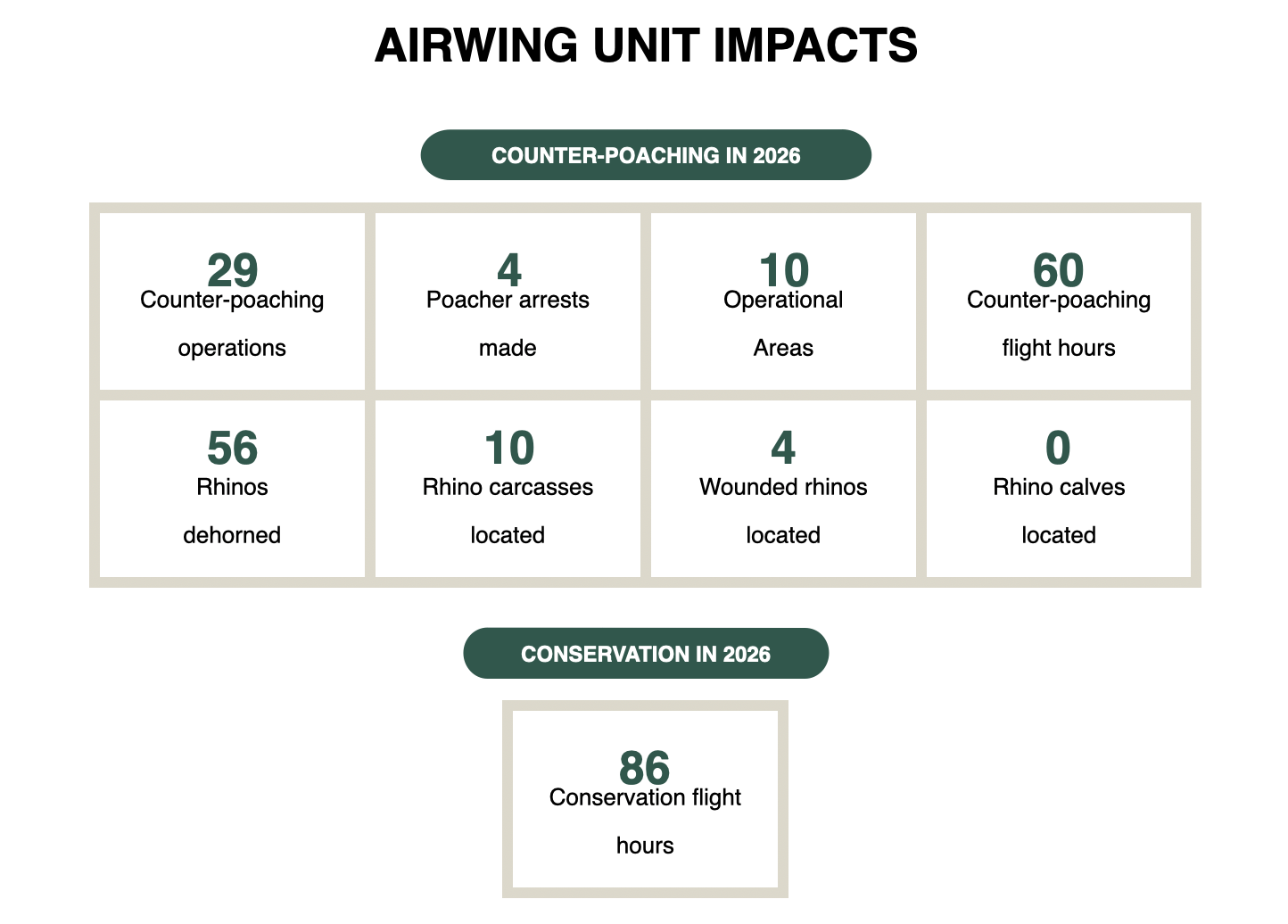
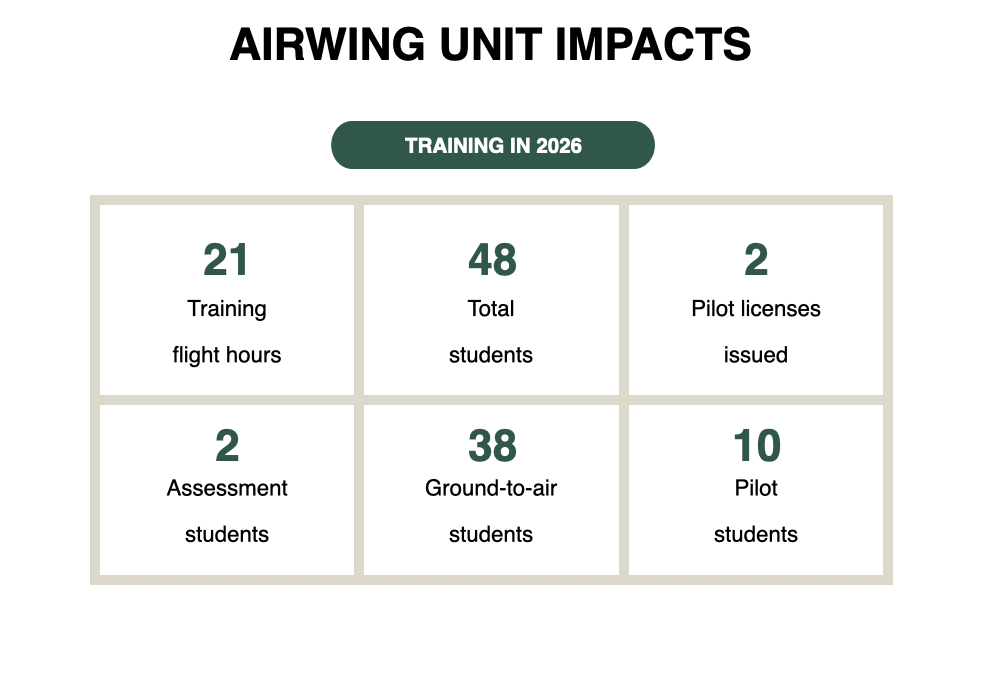
Over the reporting period, the Airwing Unit remained fully operational, continuing with its core aerial support functions, including dehorning operations and other critical conservation flights. The unit provided essential aerial support to field teams, strengthening anti-poaching and wildlife management efforts across key conservation areas. The statistics below highlight the unit’s achievements to date this year and demonstrate its growing contribution to conservation impact.