

As the world has looked with apprehension, concern and excitement at the arrival of the Artificial Intelligence (AI) application CHAT.GPT in 2023, the world of academia has been struck with a seismic earthquake. Students, lecturers and researchers now have access to generative AI, which means that an AI can generate text, images and audio based on what it has been trained on and, most importantly, what it continues to be trained on by the millions of ongoing queries and requests from AI users. AI continues to learn and grow in responsiveness to the needs of its users. So, each query about an assignment, project report, piece of research and more can be inputted into a generative AI system.
This systemic change has been one of the most significant influences in recent history in the higher education and training space, where students, lecturers and researchers use AI to assist them in finding academic sources, improving their writing skills and even assist in reviewing portions of their scholarly work before they submit it for marking. Academic integrity remains the cornerstone on which students learn, research, and develop unique individual insights against which they are eventually evaluated. However, generative AI comes at a financial cost, with higher-quality AI systems attracting monthly subscription fees, which some students may be unable to afford. The lighter or less effective versions can assist students but within certain limitations. Ultimately, CHAT.GPT, Jenni.AI, Cramly.AI and other similar examples require a pay-to-use subscription. These are essentially software services designed to generate income for the companies that develop and offer them as services.
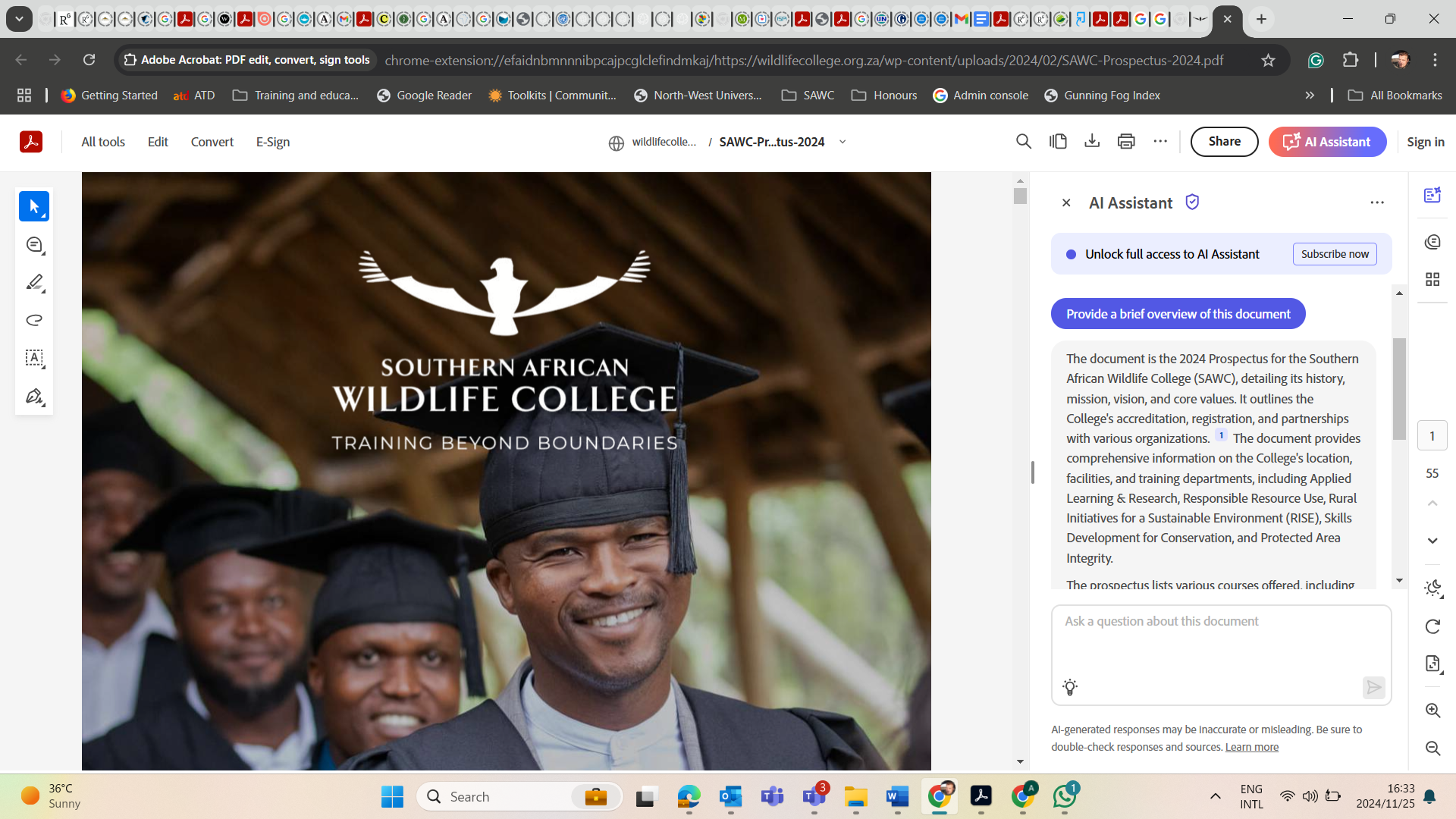
For most of us who use Microsoft as our operating system, we now have the option to utilise Microsoft Co-pilot, a large-language AI that helps us find additional content and make our work more productive. Large language model AI, such as Microsoft Co-pilot, focuses on understanding and generating human language text. It is considered a sub-generative AI focused on your Microsoft products and related services. Adobe Acrobat has an AI service called AI Assist, which helps you utilise text from your PDF documents in different ways, often helping to summarise or generate a specific output like a short paragraph based on your PDF document contents. Have a look at the example from our 2024 prospectus below and how it provides a summary of the entire document.

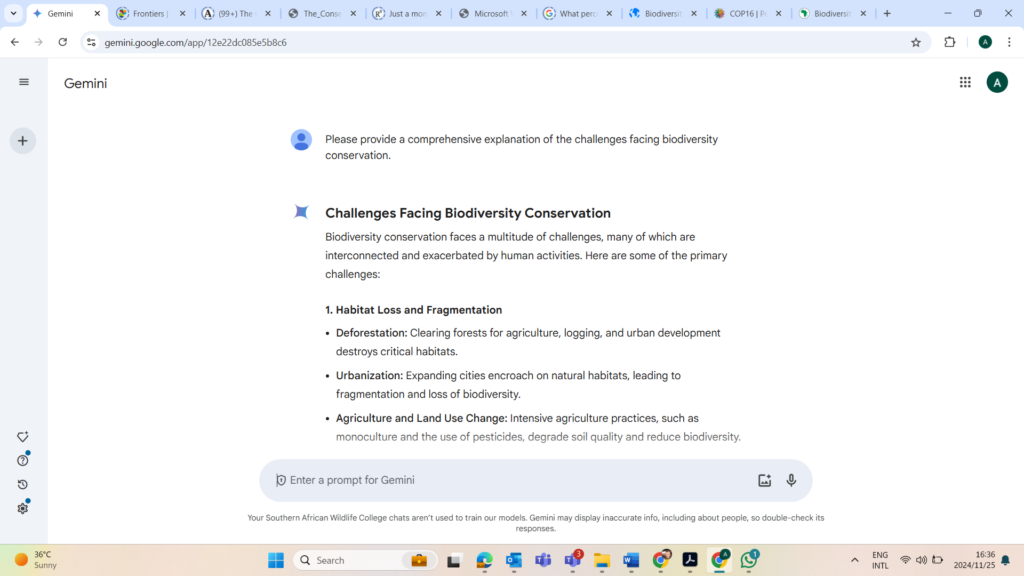
AI raises red flags and concerns about the unethical use of AI by students, lecturers, and researchers. What do we, as higher education institutions, do about it? At the SAWC, we have been fortunate enough to recently receive the generative Gemini.AI from Google as part of our Google Workspace application ecosystem. Students and academic staff can now utilise Gemini.AI to assist them in their academic work, but with the caveat that AI cannot replace their work and cannot just be copied and claimed as the student‘s work. That would be a form of plagiarism and cheating. Below is a screenshot of Gemini.AI in action after asking it to comprehensively explain the challenges facing biodiversity conservation.
The SAWC understands the opportunities that AI presents students, especially when assisting students with conceptual insights, possible pitfalls in their work and ultimately how students can improve their work. The College has implemented the globally renowned Turnitin similarity checking software, in which all student assignments are checked for similarity against millions of student assignments, research, exams, and other work across millions of pages of information located across universities and colleges globally. One of Turnitin’s features is its AI detection filters, which help lecturers detect the use of AI in students’ work.
In reality, AI is here to stay, and we, as a place of learning, have to see how we can adapt our learning, teaching and assessment strategies to meet both the challenges and opportunities that AI presents. For the College, plagiarism and similarity indexes will remain reasonable and designed to ensure that students continue to learn to evaluate, research and generate academic work, but in a balanced fashion that ensures we maintain the quality and academic integrity we expect of our students.