

Written by Wendy Collinson, Peter Hamming and Ronan Carvill
The Southern African Wildlife College (SAWC) continues to strengthen its Conservation Science thematic area, equipping conservation practitioners with the scientific knowledge and practical skills needed to address complex environmental challenges across Africa.
Advancing Applied Natural Resource Management
A defining milestone for 2026 is the official launch of our Diploma in Applied Natural Resource Management. Recognised on the South African National Qualifications Framework (NQF) at Level 6, this newly accredited three-year qualification is expressly designed to bridge the gap between academic theory and the daily realities of on-the-ground conservation work. The curriculum tightly integrates classroom instruction with extensive field-based learning, covering essential subjects from conservation biology and ecological monitoring to spatial planning and natural resource governance.
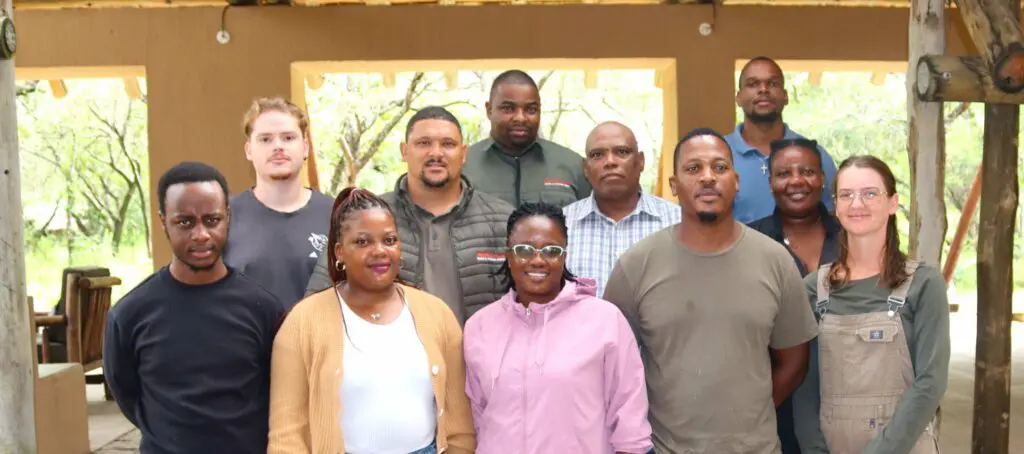
The programme has now reached an important stage: the first cohort of students is currently on site at the College for their practical placements, applying their studies in real-world conservation settings. At the same time, the College has also welcomed the first group of first-year students enrolled in the fully accredited diploma.
You might wonder how a newly launched diploma already has a cohort completing their final year. Prior to receiving full accreditation, the College proactively introduced a series of aligned short courses that covered key components of the curriculum. This innovative approach allowed dedicated students to build foundational knowledge and practical skills while accumulating credits. Following formal accreditation, a credit transfer process enabled this pioneering cohort to progress directly into their third year.
Strengthening Regional Research Support
This emphasis on practical, evidence-based training extends throughout our Conservation Science thematic area. We are continuously integrating cutting-edge scientific tools, such as Geographic Information Systems (GIS) and spatial analysis, enabling students and scholars to analyse ecological data, support wildlife management decisions and contribute to spatial planning initiatives that address issues such as habitat fragmentation and human–wildlife conflict.
However, effective, data-driven conservation also relies on robust regional networks. Recently, the College was highlighted in an article published by the South African Environmental Observation Network (SAEON). The publication described the EFTEON (Expanded Freshwater and Terrestrial Environmental Observation Network) Lowveld stakeholder workshop, an event that brought together organisations involved in long-term environmental monitoring and field-based research in the Lowveld landscape. The workshop focused on strengthening collaboration and research support across institutions working in the region.
You can read more about this regional initiative here: A Finger in Every Pie: EFTEON Lowveld Stakeholder Workshop for In-Field Research Support.
Participation in initiatives such as EFTEON ensures that the College remains connected to regional research efforts that monitor environmental change and support better conservation decision-making.
Welcoming Global Perspectives to the Lowveld
Our dynamic academic environment continues to attract international talent. One such example is Ronan, who recently arrived from Ireland to undertake a six-month internship at the College.
Meet Ronan!
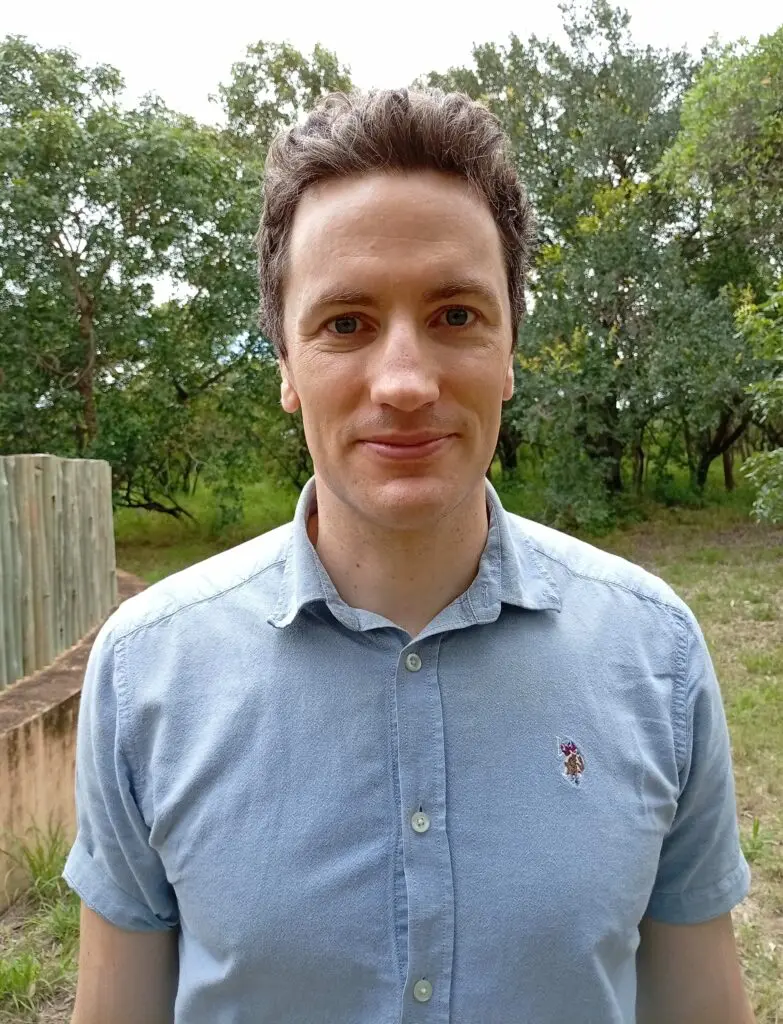
Hello! My name is Ronan Carvill.
I’ve swapped the rainy hills of Ireland for the Lowveld to join the Conservation Science department for a six-month internship. I am starting to feel at home already, but I remain in constant wonder at the rich biodiversity of this unique place. I hope that feeling doesn’t wear off too soon!
So, why am I here? I am completing an applied learning internship as part of my Master’s in Innovation, Human Development, and Sustainability at the University of Geneva. My goal is to develop pragmatic conservation skills and gain perspective from the experienced professionals here at the College. During my time, I’ll be assisting with teaching and learning, as well as conducting a dedicated research project, so keep an eye out for me in the field!
As for my backstory, my academic background is in Zoology and Ecology, with a particular focus on freshwater systems. My current interests include Nature-Based Solutions (NbS), urban biodiversity planning, and nature education. I previously conducted ecological research in Vietnam and Cambodia; interestingly, there was a strong African link to that work. While in Southeast Asia, I researched the illegal wildlife trade into China, which included rhino horn and African pangolin scales. It is fascinating to be at the other end of that supply chain now!
In addition to my ecological work, I spent five years as a high school biology and science teacher. During that time, I ran an environmental club where I focused on imparting a curiosity for the natural world and fostering creative thinking, a skill that often atrophies in students. I hope to blend my mix of educational and conservation experience during my time at the College.
On a personal note, I am an avid outdoorsman and love mountaineering, sea kayaking, and surfing. If you are heading out on any outdoor adventures, I’d love to join! I am a qualified lifeguard instructor, though I suspect that might be slightly less useful in the bush than on the Irish coast. I also enjoy “normal” sports and had a great introduction to local football during the Staff vs. Students football match last month. While I enjoyed it, it will take some time for me to get used to the heat.
This opportunity is sponsored by the Friends of African Wildlife organisation, and I want to sincerely thank them for making this amazing experience possible.