Longitudinal Research projects:
The development of the end of year 2023 practical for the series of short courses being offered has allowed the department to put in place a methodology allowing the practical’s to be linked to the outcomes of the Diploma modules submitted to the Council on Higher Education once accredited.
Other Research and Development Projects:
Eight Master’s Students were awarded their Masters under supervision of ALRD staff. Eight from the agreement with ERAIFT and one other student whose work is in progress:
- AGOSSOU Habib. Impact of grazing systems on soil water infiltration at three management sites in AKOWE IKPADOUN Marie Angèle Taïwo. Change in plant diversity with altitude in SterkspruitNature Reserve, South Africa. ERAIFT-rdc
- BIO KERI Abdou-Wakilou. Assessing Livestock Grazing Impact on small mammal’s communities of Gravelotte Rangeland, Limpopo Province, South Africa. ERAIFT-rdc
- DIDOLANVI Gbénou Justin. Altitudinal changes in the butterfly Fauna of Sterkspruit Nature Reserve, Mpumalanga, South Africa. ERAIFT-rdc
- DJOI Philémon Moïse Donatin. Camera trapping survey for mammal community monitoring at three grazing management properties in Gravelotte, South Africa. ERAIFT-rdc
- KAKULE Muleverwa Siméon. Behaviour study of high altitude butterfly species in the Sterkspruit Nature Reserve, in Mpumalanga, South Africa. ERAIFT-rdc
- KALAMBULWA Nkombe Alphonse. Comparing vegetation types, in an extensive high-altitude area, with different land uses in and around Sterkspruit Nature Reserve, Mpumalanga. ERAIFT- rdc
- KPOSSI Horace Fiacre Enock. Drone survey of livestock and ungulate populations on the Rubbervale Rockies private grazing site, Gravelotte, South Africa. ERAIFT-rdc
- SCHILL Clarissa. Monitoring Rhinoceros: Evaluating causes for ear tag loss and comparing the method to other tagging options. Uni. Nat. Res. & Life Sciences, Vienna
In Progress:
- WADE Michael – How climate and habitat availability influence the habitat associations, population dynamics, and ultimately the distributions and conservation status of Aloeides nubilus (September-October). School of Life Sciences, University of Sussex.
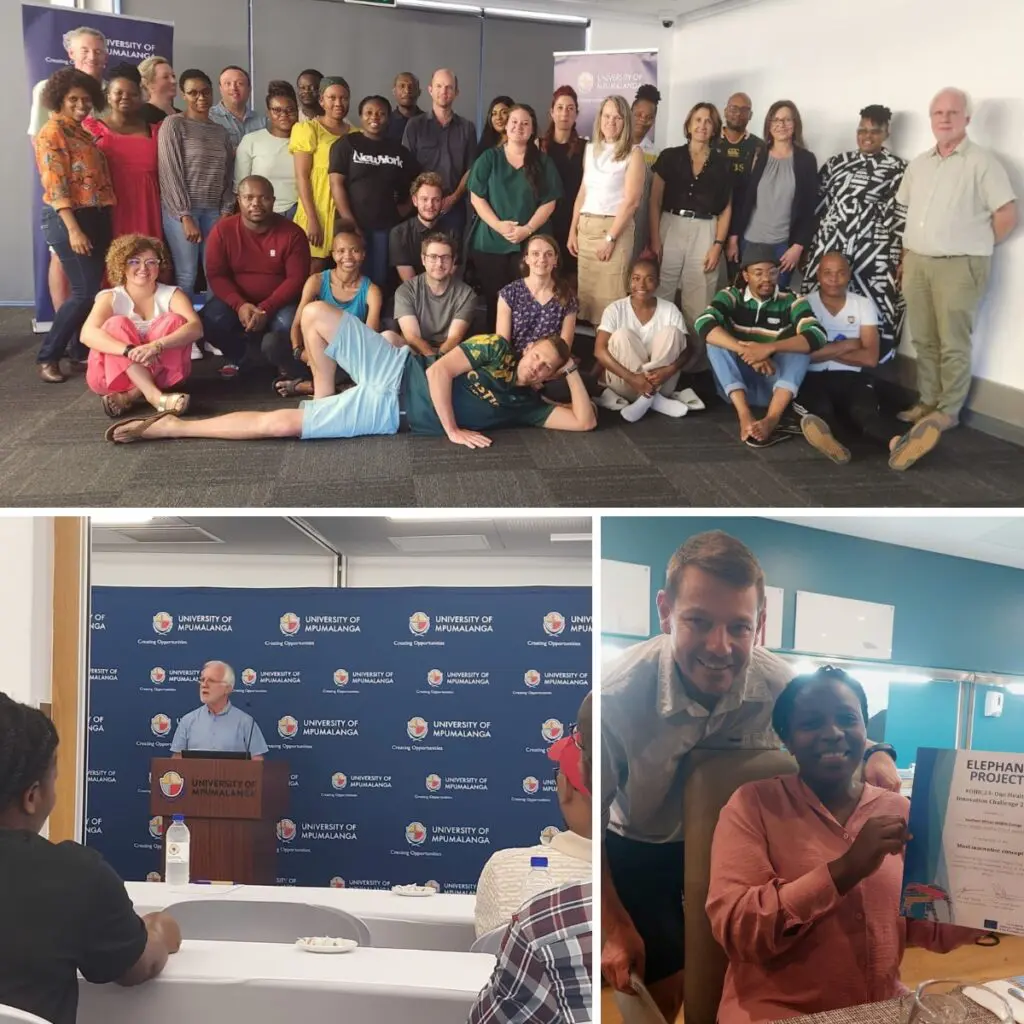
OH ELEPHANT WORKSHOP
The University of Mpumalanga recently hosted the final OH Elephant workshop from 21 – 24 November 2023. The ELEPHANT stands for Empowering universities’ Learning and rEsearch caPacities in the one Health Approach for the maNagement of animals at the wildlife, livestock and human interface in SouTh Africa. The project involves European institutions (University of Utrecht and University of Bologna) and South African institutions (University of Venda, University of Limpopo, University of Fort Hare, University of Pretoria, Southern African Wildlife College, and University of Mpumalanga). The One Health approach aims to balance the well-being of people, animals, and ecosystems by addressing health challenges at their interface, particularly zoonotic diseases. The workshop, held at the University of Mpumalanga, brought together professionals from various disciplines to explore innovative ways of conducting research in the One Health approach. The event featured interactive sessions, exercises, and group discussions, fostering collaboration and networking among participants with diverse backgrounds. The workshop left us inspired and well-equipped to contribute to One Health research projects.
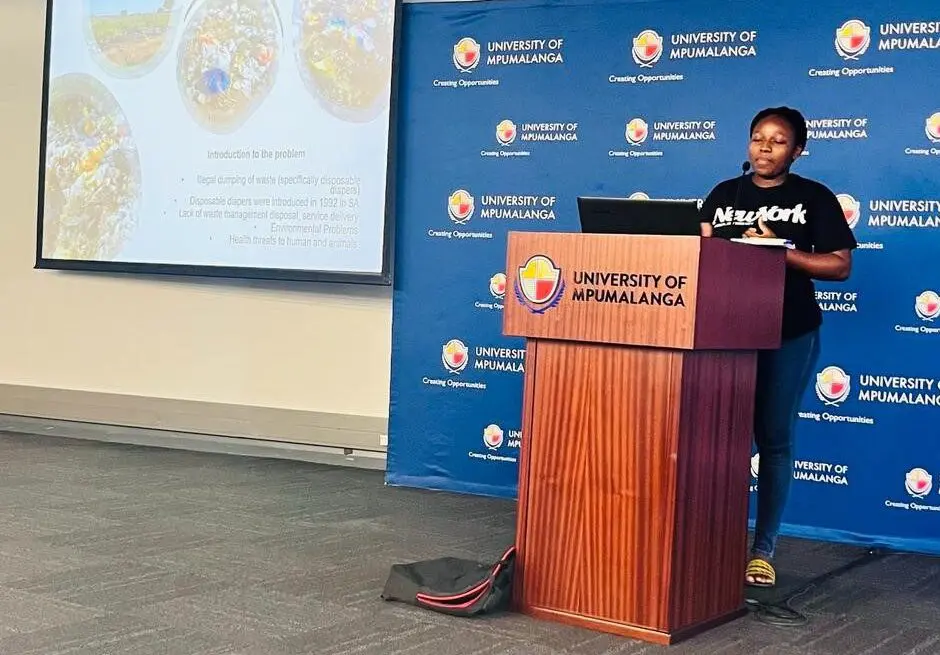
HACKATHON EXPERIENCE WITH VHUTLHARI DIAPERS TEAM
In the recent hackathon event at the University of Mpumalanga on 24 November 2023, our ALRD team emerged victorious by presenting an innovative concept for reusable diapers. The competition brought together talent from the SAWC, the University of Venda, and Limpopo to address pressing issues like disposable diaper waste, microplastics, and antimicrobial resistance. Marina Khoza, Natasha Khosa, and group leader Sathekge Salphina proposed the winning idea, with crucial support from Natasha Mahunye and the entire ALRD team. This success not only highlights our team’s commitment to quality and creative thinking but also underscores the value of collaboration and originality within our department. It serves as a testament to our dedication to pushing boundaries and making a significant impact in our field of study.