
By Sboniso Phakathi – Project Leader RISE
The Coaching Conservation programme provides Innovative conservation education through the Learning from Wildlife Model, where kids learn about wildlife, and from wildlife behaviour and their individual attributes for application in their personal lives. Having started in 2019, 2021 marks the second year of SAWC implementing the Coaching Conservation programme, and this year the programme managed to reach 804 Grade 5 learners, and 649 Grade 6 learners, comprising a total of 1453 learners from neighbouring primary schools.
The Coaching Conservation (CC) programme was fortunate to receive support from two donors namely, Investec Rhino Lifeline and the Friends of African Wildlife. Investec Rhino Lifeline is long term partner of Coaching Conservation, and has been supporting the children’s programmes as one of their Rhino Lifeline initiatives. Rhino Lifeline believes that “By educating the youth in rural communities to care about rhino and other wildlife, we develop the wildlife custodians of the future.” A sentiment which resonates with the SAWC-Coaching Conservation collaboration with the focus being to: Inspire a generation of children that care and have respect for themselves, each other, and the environment they find themselves in. A great vessel for conserving Africa’s natural resources is being realised through using sport to engender self-respect and inspire a generation of Kids Who Care.
This year we had nine participating schools from the local primary schools within the Mnisi Villages, namely: Mahlekisana, Mchuchi, Welverdiend, Mahlekisana, Sesete, Khokhovela, Lumukisa, Beretta and Mauvane Primary Schools.
The second part of this experience is the overnight bush camp provided to the same group of learners. The overnight camps provide the children with the opportunity to spend a night at the College, experience a guided bush experience and enjoy the hospitality whilst learning about vultures, the African elephant and the Southern white rhino. The overnight camp remains a favourite across the board, as this coincides with many of the learners’ first experience in a wildlife or conserved area.
The youngsters are taught to value wildlife and natural environments through immersive experiences, which continues to be a meaningful way for reaching the next generation of custodians towards conserving Africa’s natural resources and inspiring a generation of Kids Who Care. 416 kids were exposed to the one-day Rhino Rapid Awareness Programme, which was facilitated on site, providing this group of children a very similar experience to the six week programme learners.
Gauging the success and impact of the programme, Swiss based, Friends of African Wildlife extended the opportunity to SAWC for 125 children from the neighbouring schools to participate in an overnight programme, and receive the same Coaching Conservation collateral. We saw a great opportunity to include SAWC’s staff kids to the list, receiving 25 staff children and 100 children from SAWC’s wider zone of influence.
The acknowledgement and positive feedback from the community and parents who appreciate the presence of the programme in their schools reaffirms the value of the programme.
The involvement of educators is key for the success of this programme, and for this we’d like to start by commending Mr. Mropane from Mahlekisana primary school for his excellent participation. He demonstrated that being an educator requires passion and dedication.
The final and perhaps most important thank you’s go out to our lead Coach Professor Mtungwa, supporting coaches Goodwill Seepane, Queeneth Seepano, Precious Ndlovu, and Ponagatso Mogakane. This team of leaders keep the spirit of the programme high even under very challenging conditions, and braving the 40 degree sun to meet targets and deliver a quality learning experience.
Here we introduce our supporting coaches, all of whom are from our local community:
I attended primary school at Mahlekisana and I progressed to high school which is Mahlale High School where I completed my Grade 12.
I wanted to participate in this programme to have fun with kids and inspire them by teaching them about the environment which may have a positive impact on them whilst also developing a desire to protect or work in wildlife areas.
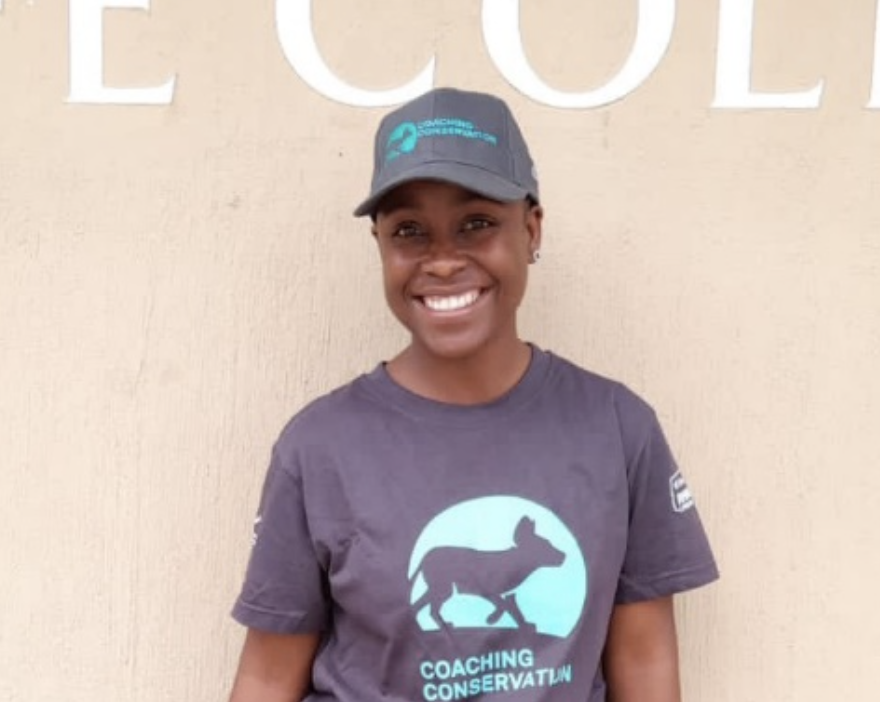
My name is Lidia Sifunda. I am a 26-year-old female from Welverdiend Village. I was born and raised in Buffelspruit in Magolide Hospital (Mpumalanga). I went to Mawewe Primary School and finished my matric at Ndlela High School in 2017.
After my matric, I did a Youth Access Bridging Course which included environmental education in 2018 at the Southern African Wildlife College.
Here I was sponsored by Friends of African Wildlife. In 2019, I was trained as a Coach in Coaching Conservation and worked with the programme for the whole year. In 2020, I did a course in Foundational Learning Competencies, again sponsored by Friends of African Wildlife, followed by FGASA Level 2 to be a qualified field guide for the benefit of Coaching Conservation program during game drives. Here I was sponsored by Distell Limited, with further support kindly provided by Friends of African Wildlife.
The reason I chose to be involved in Coaching Conservation, is because it is aligned with my career which is environmental education and field guiding. I will be inspiring kids to love and care about nature, as well as showing them how beautiful nature is. I want them to contribute to the protection of our natural areas and wildlife species as a whole.
Greetings my name is Ponagatso Revelation Mogakane, I was born in Bushbuckridge. I am 27 years old.
I completed my matric in 2014 and then in 2018 completed an Environmental Education module and a Basic Field Ranger armed course as part of the Youth Access bridging course offered by Southern African Wildlife College (SAWC).

I was very fortunate to be sponsored by Friends of African Wildlife. I then completed a Level 2 qualification in track and sign in Moholoholo Nature Reserve and trained as a cyber- tracker at Kings Camp Private Nature Reserve. I have gained more experience as a ranger, and in guiding and tracking whilst learning how animals survive in the bush. The environment is very important and it is vital to conserve our natural resources.
I fell in love with nature, which made it easier for me to preach about the importance of taking care of our environment.
I am in Coaching Conservation because this programme inspires kids. We are involved in training kids to care about nature, which I see as an important part of my career. I enjoy Environmental Education and I want to be part of the changing world by offering my knowledge and skills during my training to conserve our fauna and flora and maintain our biodiversity for the community and the whole country at large.

My name is Precious Ndlovu, I’m 30 years old. I am from Welverdiend Trust in Bushbuckridge, Mpumalanga Province. I come from a big family of 10 raised by both parents. I matriculated in 2010 at Mafemani Nxumalo High School.
I have an N6 Certificate in Marketing Management; Environmental Education at NQF Level 5 and am currently doing my final year towards a National Diploma in Public Relations with UNISA.
I wanted to be part of the Coaching Conservation programme to raise awareness, develop environmental knowledge and change the attitude of leaners from our local schools about conservation and to inspire them to care for nature and each other.

My name is Queeneth Seepano, and I come from Welverdiend Village.
I started schooling at Mahlekisana Primary School, and went to Mahlale High School. I then studied at the SAWC completing the Youth Access Bridging programme, learning about: Wildlife Guardianship, Field Ranging, Environmental Education, Reptile Orientation and Leadership for six months. This was thanks to the support of Friends of African Wildlife.
I am in this programme because I love nature want to share my knowledge with others so that they know the importance of our natural world and how we all need each other in order to survive. What makes me happy is the fact that we dealing with young minds and they are the future generation that will have to look after the garden of God. Hopefully now being exposed, they will grow up knowing that poaching shows a is lack of care for our wildlife, that it is illegal and it has a negative impact in the ecosystem. They now know that we are all connected and need each other to survive. I am here to also inspire them with my knowledge and make the world a better place through my efforts and theirs.
Coaching Conservation
Coaching Conservation is a wildlife conservation initiative with its core mission to Inspire Kids to Care and to be more empathetic towards wildlife and the struggles they face.
More Information